Noise
Feeds, notifications, and the tab you opened for one second. Passive consumption on autopilot.
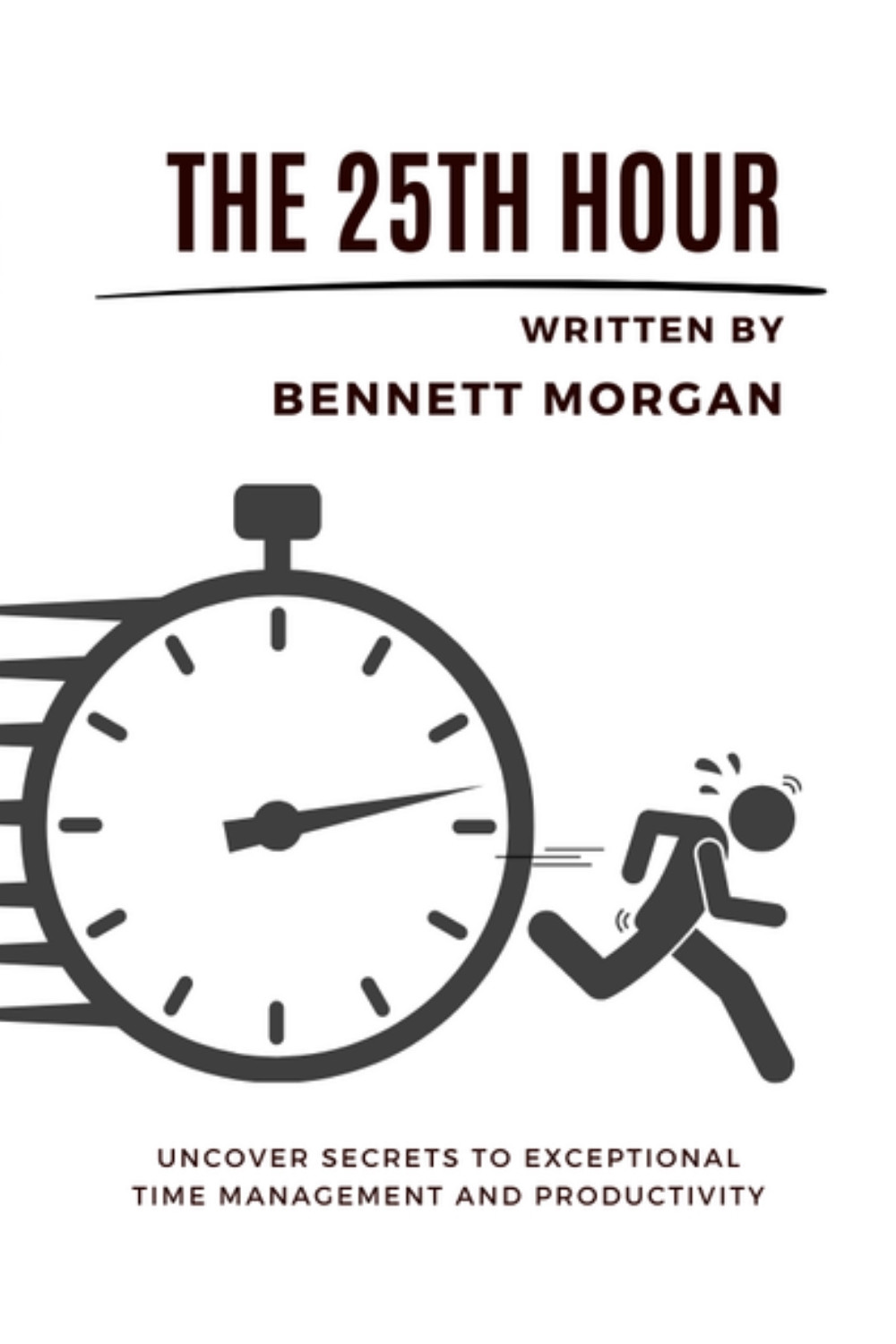
The 25th Hour shows you where that hour goes, how to take it back, and what to do with it once it's yours. A practical method built for ordinary weeks, tired evenings included.
or get the Kindle editionAvailable on Amazon in paperback and Kindle.
Most people lose sixty to ninety minutes a day to meetings they didn't need, scrolling they won't remember, and work they redo or over-polish. Move the slider to see what your leak costs you in a year.
Hours a year, workdays only
Hours a year, every day
Working weeks a year
Calculation based on 250 workdays a year.
The book names them so you can measure them. Every minute you lose fits one of these five.
Feeds, notifications, and the tab you opened for one second. Passive consumption on autopilot.
Starting, stopping, searching, switching, and redoing. Each piece feels like real work while it happens.
Meetings, requests, and favors you accepted by default.
The extra polish nobody asked for. Perfectionism dressed up as diligence.
Time you cannot account for. Often the largest leak of all.
Five steps that run as a loop. Each one has its own chapters and its own worksheet.
Find the leak. Log three ordinary days and measure where your time actually goes.
Kill it, cap it, or hand it off. Remove work, using prioritization and delegation as tools for doing less.
Fence the hour. Time blocking, focus routines, and ready-made lines for saying no.
Put the hour into one thing that compounds: a skill, a project, your health, your career.
Reconcile every Friday in ten minutes, then run the loop again.
Chapter 1 walks you through the first step of the method and ends with Worksheet 1, the Time-Log and Leak Report. Run it over three ordinary days and you will know your daily leak in minutes.